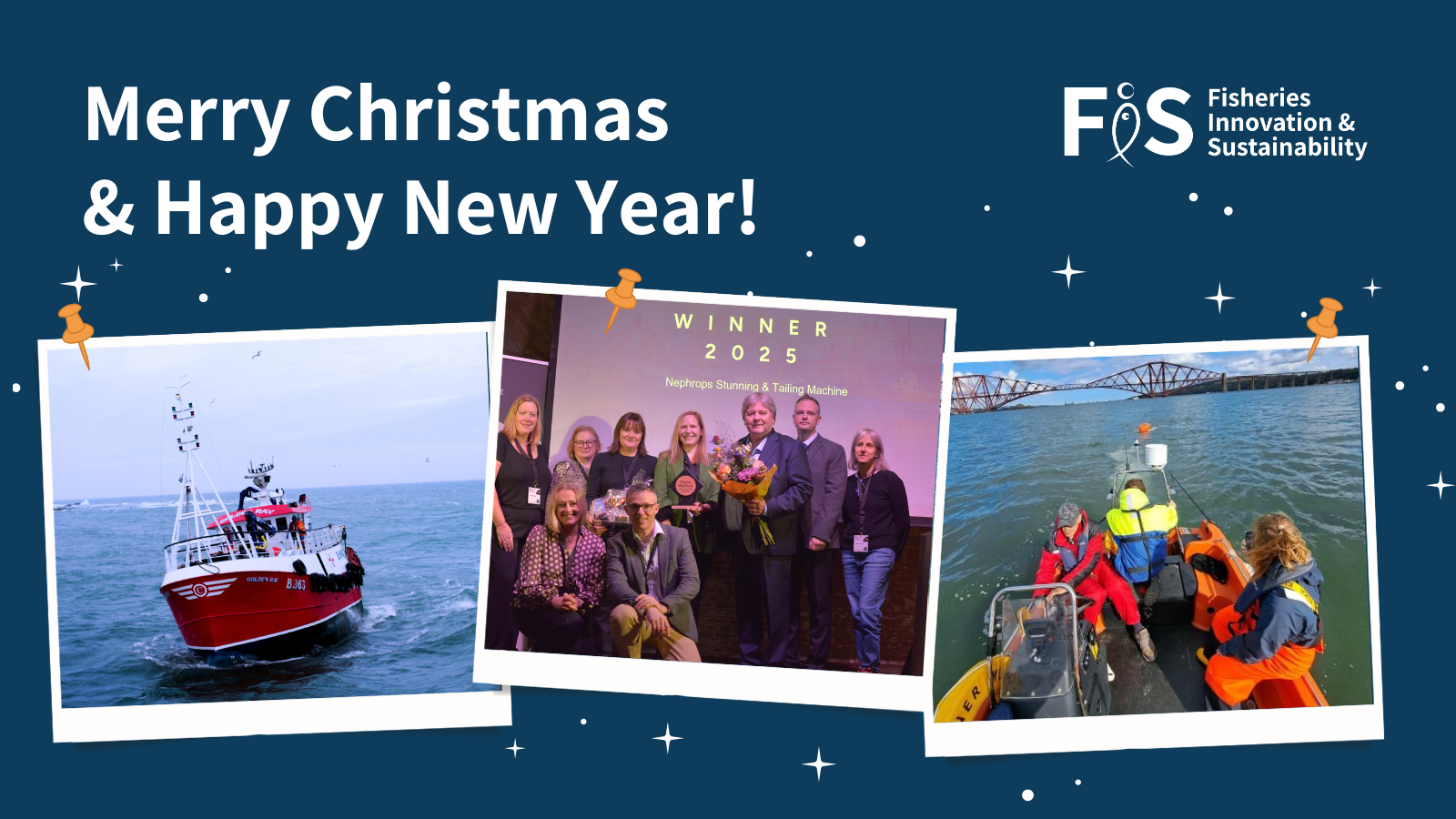
As the year draws to a close and we look back on 2025, Fisheries Innovation & Sustainability would like to thank all our partners for their ongoing collaboration and commitment to creating the conditions that can drive innovation for a prosperous and sustainable UK seafood industry.
Championing projects that will make the greatest positive change for UK fishing and seafood, this year our focus continued across a number of core projects:
- The pioneering stunning and tailing Nephrops machine which will bring significant improvements to one of the UK’s most important fisheries;
- AI precision fishing system Smartrawl which puts the UK at the forefront of eliminating discards and bycatch; and
- Vessels of the Future as we continued to explore how to decarbonise fishing vessels in ways that are practical, safe, and competitive for UK fleets.
It’s been a big year for us. Some key 2025 highlights:
We jumped into the new year with the first full scale deployment of the Smartrawl system at sea off the coast of Shetland. Despite challenging sea conditions, the fully integrated system was deployed and recovered from a small fishing vessel, and the first successful at-depth rotation of the patented gate system was recorded, demonstrating that the in-water sorting system can switch quickly between catch and release positions.
Highlighting the potential of the system, the trials also provided information to progress updates across the tech’s core components – its AI-driven stereo camera, gate, and latch mechanism – including improvements to the system’s patented gate, which underwent successful rotation trials in the Firth of Forth this autumn. We also came out with a robust dataset comprising almost 3,000 labelled images of nine fish species caught commercially in the UK, improving the AI’s ability to recognise fish in real-world scenarios.
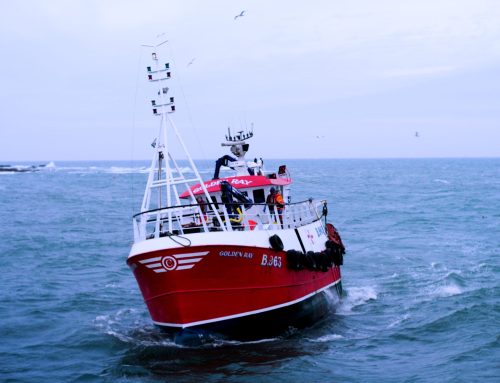
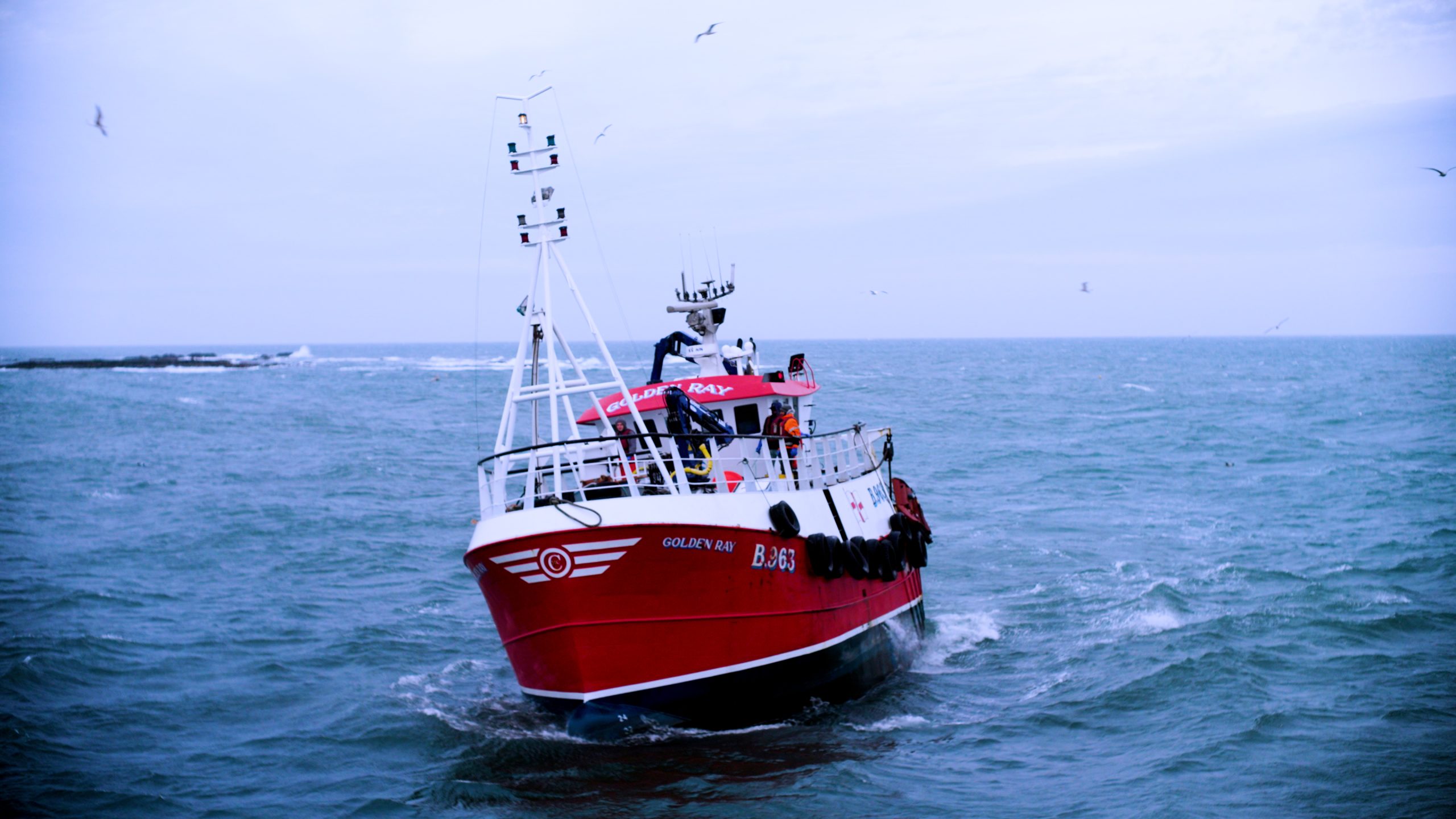
Holding huge promise towards improved animal welfare and product handling, and improved crew working conditions across one of the UK’s most valuable fisheries, our Nephrops stunning and tailing machine demonstrated its capacity to withstand conditions at sea, when the machine was successfully trialled aboard the commercial prawn trawler, Golden Ray, in May. In September, the project secured funding from Northern Ireland’s Department of Agriculture, Environment and Rural Affairs (DAERA) to drive forward development to create a full-capacity, automated system for testing at sea next spring.
Ticking all the boxes, the potential of this pioneering machine has not gone unnoticed. International recognition for the machine’s potential saw the project shortlisted for a Responsible Seafood Innovation Award by the Global Seafood Alliance in October, and announced winner of the first-ever Catch Welfare Innovation Award by the Catch Welfare platform at its annual conference in the Netherlands in November.
And the road to a net zero fleet? Across the year, we continued our efforts to investigate opportunities and push for actions needed to ensure that no fleet segment is left out of the shift to low-carbon fishing – and brought this discussion to various fora, from Westminster to the BBC’s The One Show. Key asks? Appropriate infrastructure, financial support and business advice for net zero vessels, suitable to different fleets.
What opportunities lie ahead? And can we create the conditions for innovation in 2026?
Following the announcement of the UK’s Fishing and Coastal Growth Fund in May, our Executive Director Kara Brydson spoke at an event in Westminster co-hosted by the APPG on Fisheries and APPG for Shellfish Aquaculture exploring what an effective, targeted fund might look like.
The consistent call for action across industry at that event? We need a strategy that focuses on economic prosperity and sustainable businesses, enables realisation of good ideas, understands the complexities of the sector, supports game-changing, business savvy responses to new problems, facilitates access to funds in a manner that allows businesses plan for action, and is backed by political will and an appetite for change.
Now in our 11th year, we have learned that innovation takes time, patience, flexibility, collaboration, and a great deal of practicality suited to the realities of the sector.
To support innovation and create lasting change, we need a fund that focuses on priority areas to support fishing businesses, is flexible and accompanied by a supportive regulatory environment. Under these conditions, industry-led solutions can lead to growth, through innovation in marketing, technology, science, recruitment, and training – addressing core challenges, but going beyond surface fire fighting, and planning for a future ready industry.
This is where we see opportunity for real change in 2026.
As we get ready to wrap up 2025 with these reflections, we wish all our partners a safe, restful and happy Christmas, and look forward to working with you all next year.